
Pushing the boundaries of Moore's Law. Harnessing quantum algorithms to accelerate high-fidelity modeling for nodes below 3nm.
H-DES simulates complex multi-physics phenomena at the nanoscale using a hybrid quantum-classical approach, enabling early detection of voltage and reliability anomalies while keeping classical methods for overall analysis.


As transistor densities increase, localized heating and current crowding create thermal hotspots and electromigration risks, threatening performance and lifetime.
H-DES models coupled thermal, electrical, and material stress phenomena, predicting hotspots and material degradation across the chip.


High-frequency circuits, multi-core processors, and complex IC architectures require precise power and signal integrity analysis under dynamic conditions. Classical methods struggle to simulate large-scale interactions quickly.
H-DES solves large-scale PDEs for voltage, current, and signal propagation, enabling rapid evaluation of power integrity, IR drop, and noise margins across the entire chip.

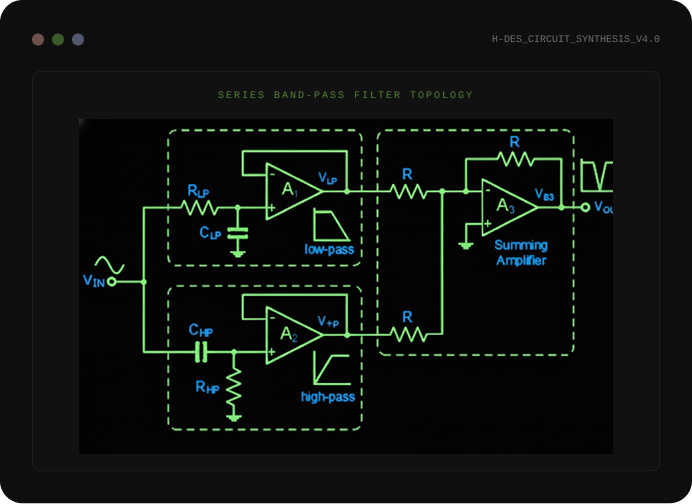
Semiconductor design relies heavily on advanced simulations and large scale numerical models. As chip complexity increases, these simulations become more difficult to compute and require significant resources.
ColibriTD focuses on use cases where quantum computing can be applied to scientific computing challenges in chip design.
Key use cases include:
Early anomaly detection aims to identify defects or abnormal behaviors at an early stage of the design or validation process. These problems often involve large datasets and complex pattern analysis.
Thermal and electromigration modeling are critical for reliability. Engineers need to simulate heat dissipation and material degradation over time, especially in dense and high performance chips.
Power and signal integrity analysis focuses on the behavior of electrical signals in increasingly dense circuits. These models rely on large systems derived from electromagnetics and circuit theory.
ColibriTD develops hybrid quantum algorithms designed to explore these types of numerical problems and allow engineers to experiment with new computational approaches.
Semiconductor simulations often rely on solving large systems of equations derived from physics models such as heat transfer and electromagnetics.
As designs become more complex, simulation time and computational cost increase significantly. In some cases, this limits the level of accuracy or the number of scenarios that can be tested.
Hybrid quantum algorithms introduce new ways to explore these mathematical problems.
ColibriTD provides tools such as Hybrid Differential Equation Solver (H-DES), Multi-Platform Quantum Programming (MPQP), and the Quantum Innovative Computing Kit (QUICK) platform to experiment with these approaches. Engineers can test quantum algorithms on real simulation problems and evaluate potential gains in computation time, cost, and model accuracy.
ColibriTD solutions are designed to integrate with existing simulation and engineering workflows.
Instead of replacing current tools, the approach is to extend them with quantum capabilities. Engineers can identify critical computational bottlenecks and test quantum algorithms on specific parts of the workflow.
Through MPQP, teams can develop and run quantum programs across multiple hardware backends without rewriting their code. With QUICK and the QUICK-PDE Qiskit function, they can experiment with hybrid algorithms on problems derived from semiconductor simulations.
This allows R&D teams to move from early experimentation to more advanced testing while keeping flexibility on the choice of quantum infrastructure.